EXPLORE THE BLOG
christopher Norment
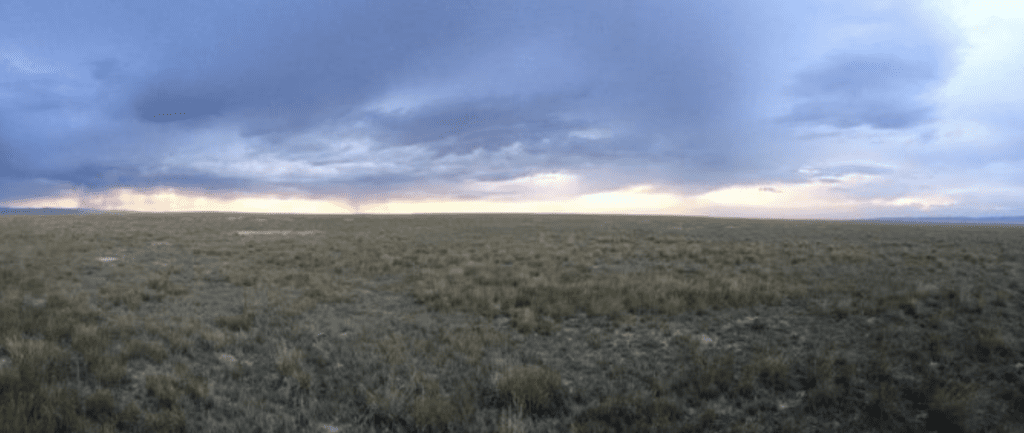
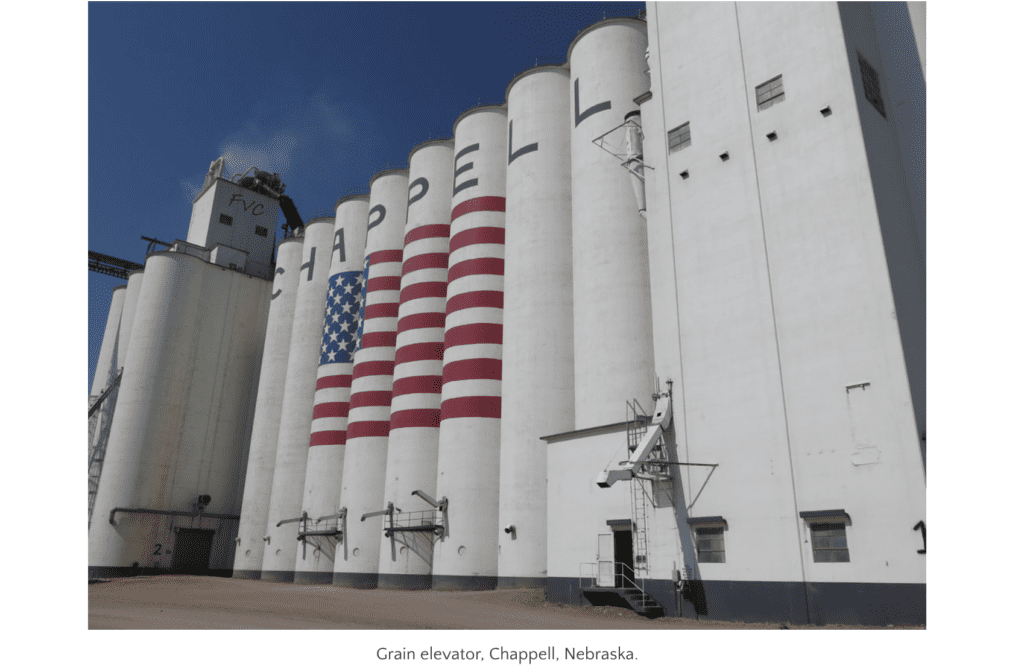
A friend once likened boredom to “driving Interstate 80 across Nebraska,” but that’s never been my experience. I’ve crossed the Great Plains from east to west at least thirty times, riding the Interstates and secondary highways out of the humid Midwest and into the arid West. I love the transition from one ecology and aesthetic to another, what the poet and essayist Merrill Gilfillan calls “that satisfying transcontinental dovetail’: maple and hickory forests giving way to grasslands, eastern meadowlarks yielding to western meadowlarks, the land opening up as the trees retreat into swales and bottomlands. Massive grain elevators anchor scattered towns to the earth, mechanized irrigation systems roll through fields of corn and alfalfa. The West arrives, more or less, near the hundredth meridian, the approximate position of the 20” isohyet for rainfall. to the east, traditional agriculture is possible; to the west, irrigation is necessary, except in rare, well-watered places.
As moisture drains from the High Plains, so do humans: since the 1920s many counties west of the hundredth meridian have hemorrhaged people, particularly their young. Sustainable economies are hard to come by; poor dryland farming practices nurtured the Dust Bowl, and now we suck the Ogallala Aquifer dry, ride the boom and bust of Bakken oil shale towards another kind of collapse. Dreams of winter wheat, center-pivot irrigation, hydrofracking: on and on. Abandoned farm buildings and rusted windmills whisper of loss and betrayal: not so much by the land as by the politicians and companies who have sold a fantasy—“rain follows the plow” or its modern equivalent—to the innocent for more than 150 years.
And so out in western Nebraska, near Gothenburg (population 3,475, milepost 211) the soundtrack for my drive suggests the Tragically Hip’s “At the Hundredth Meridian”: “Left alone to get gigantic / hard, huge, and haunted….”—a hard and huge land, haunted by our stubborn hubris.
Yet on the High Plains I always return to the immense sky, distant horizons, pillars of electric-white cumulonimbus clouds: endless fractals of light and space and energy, a perfect setting for long drives, an achingly lovely place on just the right summer day, gently warm and windswept, the prairie an endless green wave, perhaps a curtain of gray-hanging rain on the farthest edge of the earth. . . . Driving I-80 across Nebraska for hour after hour: it’s an activity and land conducive to thinking, and on this long roll I have been considering beauty, pulled there by an NPR interview with the Irish poet and philosopher, John O’Donohue: “Beauty,” said O’Donohue, “is that in the presence of which we feel most alive.” And so as I hurtle towards the Great Basin, I am transported by beauty as much as by an internal combustion engine: tracking this great space, O’Donohue’s words, and my own desires, beneath a western sky.


Leave a Reply