EXPLORE THE BLOG
christopher Norment
It is almost time.
My sabbatical year is practically finished. Soon I will resume my “normal” academic life. There will be classes, independent studies, new graduate students, meetings, and a diverse collection of research projects to attend to—plus the responsibilities, minutiae, frustrations, distractions, and pleasures (there are a few of those) associated with my duties as department chair.
After a year of less frenetic activity the pace of my life will quickly accelerate: 20 to 100 mph in a day or two. The problem is that over the last year I have grown academically fat and lazy, and it will not be easy to get up off the sabbatical couch. And although I hope to retain some of the equanimity that I’ve gained during my sabbatical, I suspect that this hamster most likely will hop right back on his wheel. It is difficult to cache relaxation, more difficult still to resist the incessant demands of must and should.
But I am not complaining (well, not too much), for I appreciate my good fortune. By virtue of education, career, and economic status, I’ve had the opportunity to take a year off from my regular work and devote myself to research and creative activities. Although opting for a year-long sabbatical has meant a fifty percent reduction in pay, I have been able to cover the loss in income, which has been more than offset by a reciprocal increase in another, more precious form of compensation: time.
My sabbatical has not been a vacation, even if it sometimes resembled one, as I ignored most requirements of my regular job and slipped into a slower pace of life. And because my creative and scientific projects required immersion in the natural world, and being in wild and lovely places is what I do for recreation, the last year just has not felt much like work.
So—I am very grateful for my sabbatical, which is the sort of privilege afforded to very few working people in this world. And when I think back on this last year, I recall many experiences that touched me deeply, and which for one reason or another will remain with me for years to come:
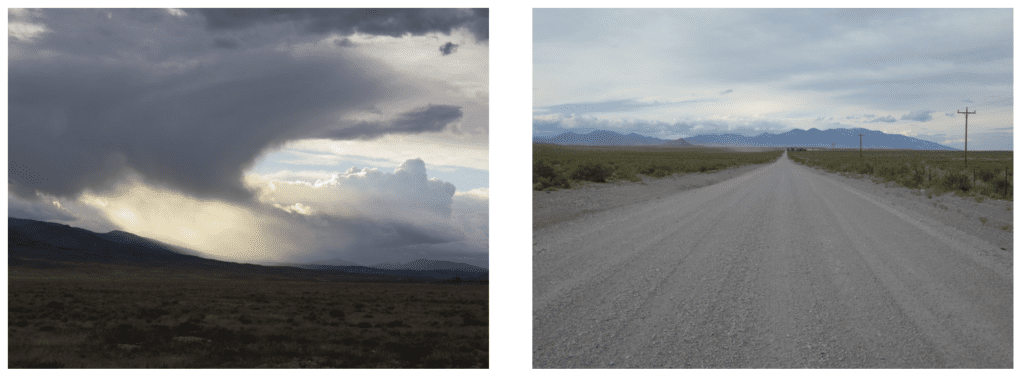
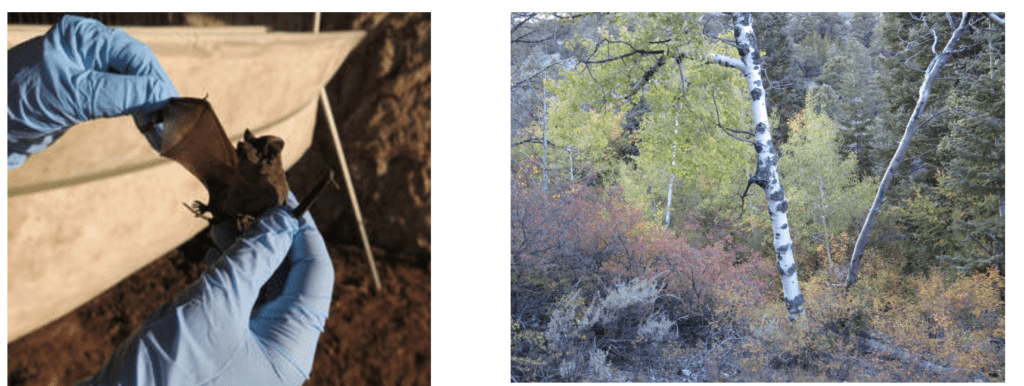
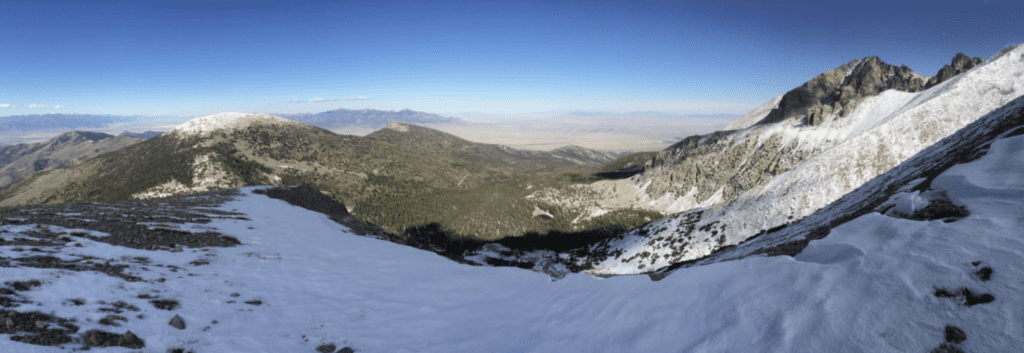
- Great Basin National Park creative residency—Driving the long and lonely road to Gandy, Utah, and the lovely, transcendent spatials of the Basin and Range country; climbing Wheeler Peak on a bright and cold and windswept autumn day; watching Mexican free-tailed bats spill out of a cave at the rate of 120,000 per hour; and coming into an appreciation for the ways in which diverse groups of people of the Snake Valley have fostered a sense of community.
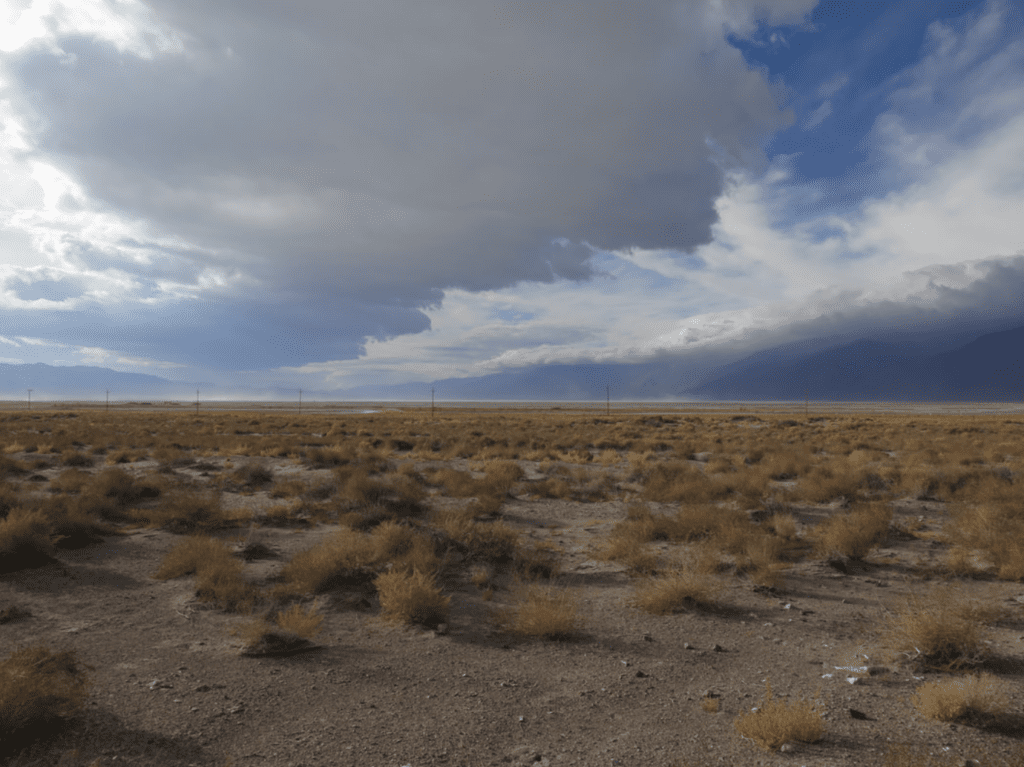
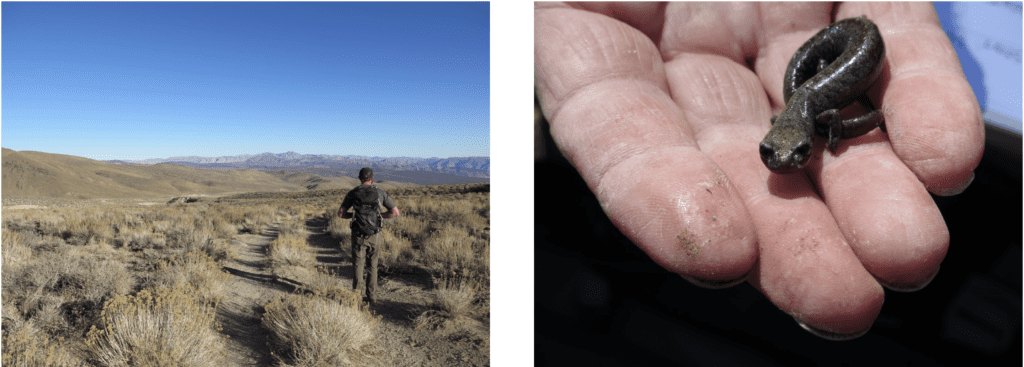
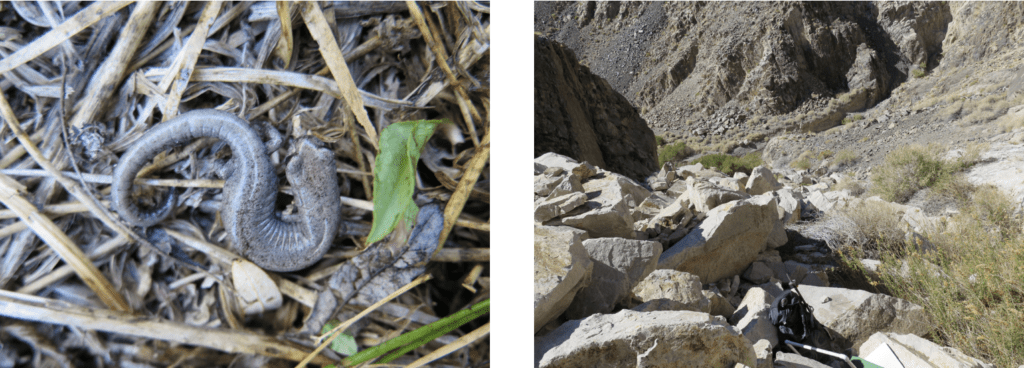
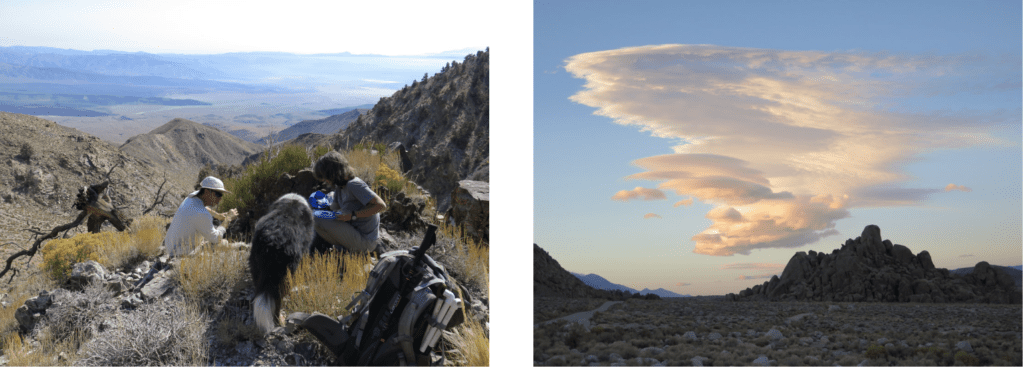
Autumn salamander work—Finding my first salamander of the season, and developing a better search image for the species; discovering a new salamander locality, the first documented site in Death Valley National Park; and coming into an accommodation with the Inyo Mountains—their ruggedness, aridity, and isolation.
- Winter hiatus—Tumbling down various rabbit-holes, including one that resulted in a new and completely unexpected book project, which I have nearly completed.
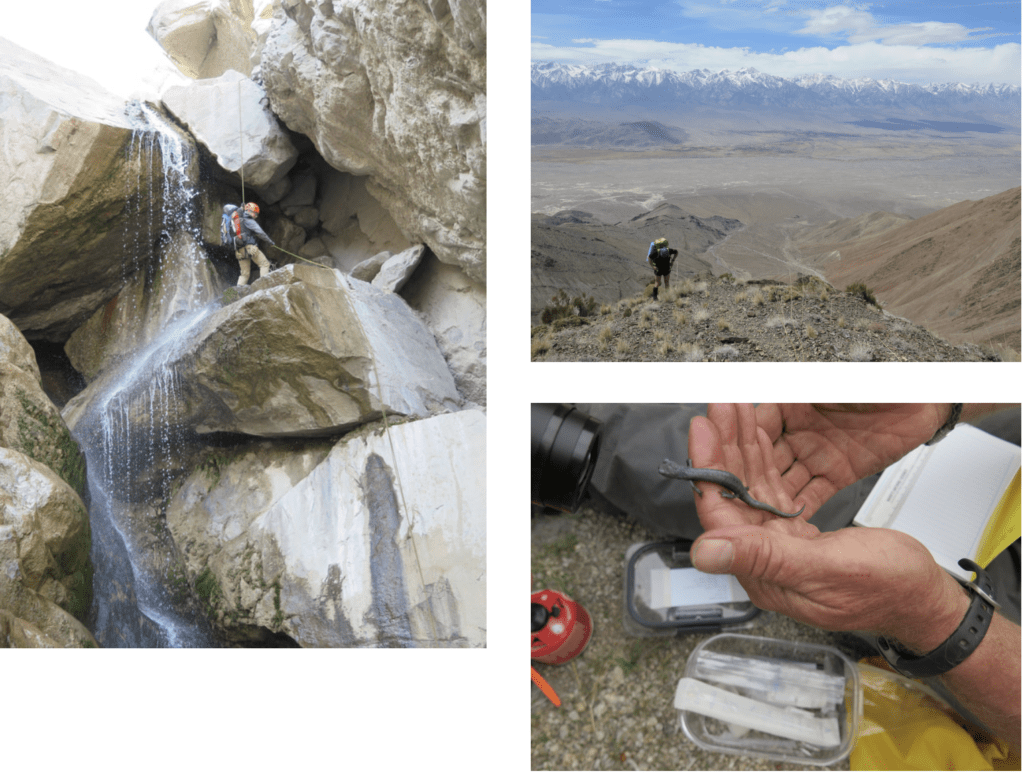
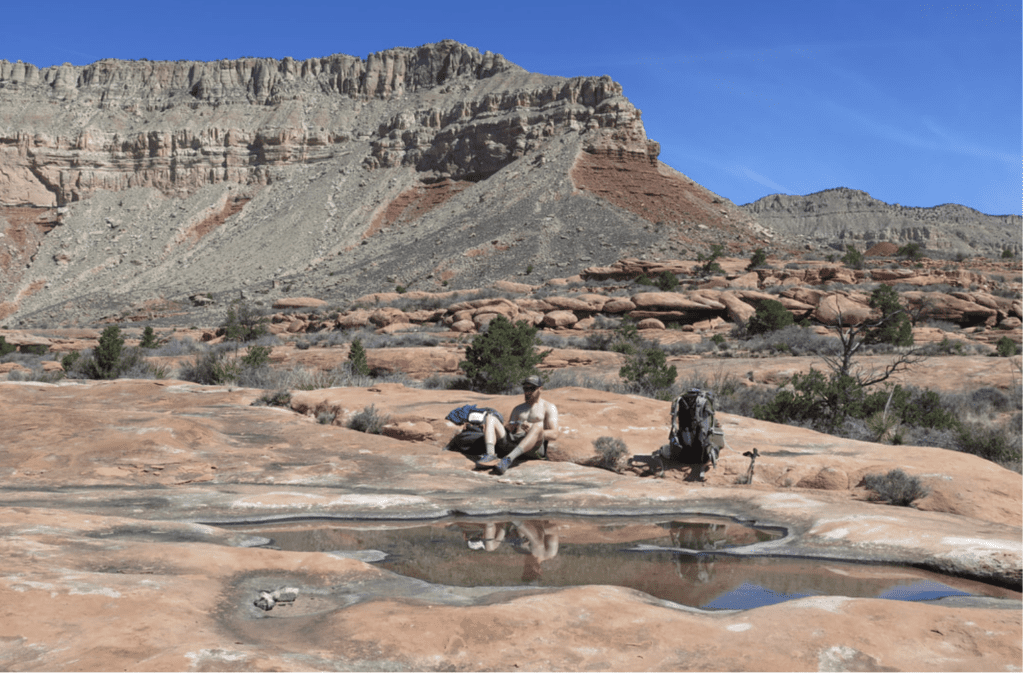
- Spring salamander season—A difficult four-day crossing of the Inyo Mountains, with nine rappels and just one lonely salamander along the way; an increased understanding of how flash floods impact the species; the final salamander of the season (FR-25); and a six-day March hike in the Grand Canyon with my son, Martin.
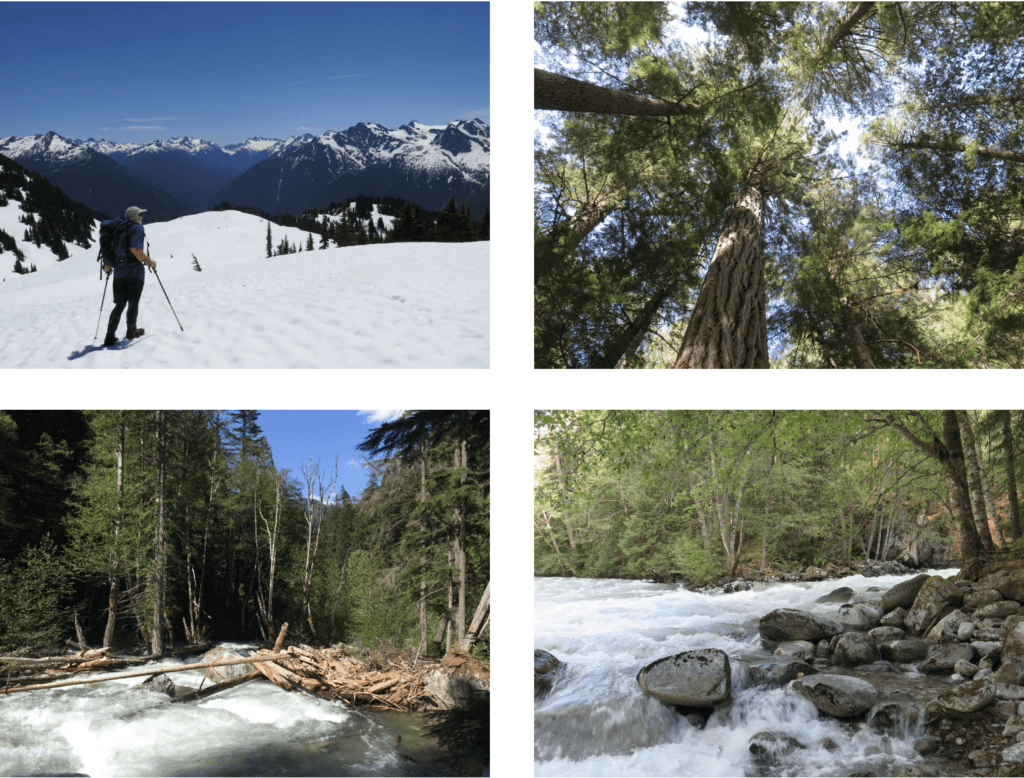
North Cascades Environmental Learning Center creative residency—Interacting with the good folks at the NCELC (staff, graduate students in the environmental education residency program, visitors, other creative residents); spending three weeks exploring the western side of the North Cascades; a two-hour-plus run through giant Douglas firs and western red cedars, which turned into the most wonderful trail run of my life; and finishing several long-delayed creative writing projects.
Many of these experiences, and their rewards, are personal. But what about professional benefits, particularly those that accrue to the College at Brockport, and justify any costs it incurred due to my sabbatical leave? My sabbatical allowed me to develop new professional relationships, particularly with researchers who study salamander ecology and evolution. These collaborations resulted in two new grant applications, which if funded will support a molecular genetic study on the evolution and population structure of the Inyo Mountains salamander. I (and several coauthors) also completed a scientific manuscript based in part on my salamander research, as well as another long-overdue one on grassland bird ecology and management. I picked up a few new research skills along the way, and did some reading and thinking that will affect how and what I teach in several courses, including Wildlife Ecology, Herpetology, and Environmental Literature. Hopefully, these things will benefit Brockport students, via stronger classes and increased opportunities for gaining research experience.
But above all else, I am happiest and most satisfied about getting to know the Inyo Mountains salamander and its home country in a more intimate and intense way. The salamander’s story, and the beauty that I encountered during my explorations, have given me great pleasure, hope, and inspiration.
—
Finally, thanks to all who helped out along the way, including: The College at Brockport, for supporting my sabbatical; colleagues in the Department of Environmental Science and Ecology, who picked up the slack created by my absence; many dedicated field companions; agencies and individuals who facilitated my research and creative residencies (particularly the U.S. Fish and Wildlife Service, California Department of Fish and Wildlife, Great Basin National Park, and North Cascades Institute); and friends and family. My biggest debt, though, is to Ceal Klingler and Stacey Brown of Bishop, who gave me a place to live while I worked on the salamanders. Without their generosity and friendship, my salamander project would have been much more challenging, if not impossible, to carry out.